Alzheimer's Starts in a Spot You've Never Heard Of
Alzheimer's Starts in a Spot You've Never Heard Of
Your 'Motor Brain' Actually Controls Emotions
The Bacterial Sugar Behind Crohn's Disease Flares

How Gut Bacterium Bt Unlocks Fiber's Hidden Nutrition

Metformin Anti-Aging: How a Diabetes Drug May Slow Aging
Precision Vagus Nerve Stimulation: Organ-Targeted
TL;DR: Sonogenetics uses focused ultrasound and genetic engineering to remotely stimulate neurons without brain surgery, offering reversible treatment for Parkinson's, epilepsy, depression, and chronic pain with early trials showing promising results.
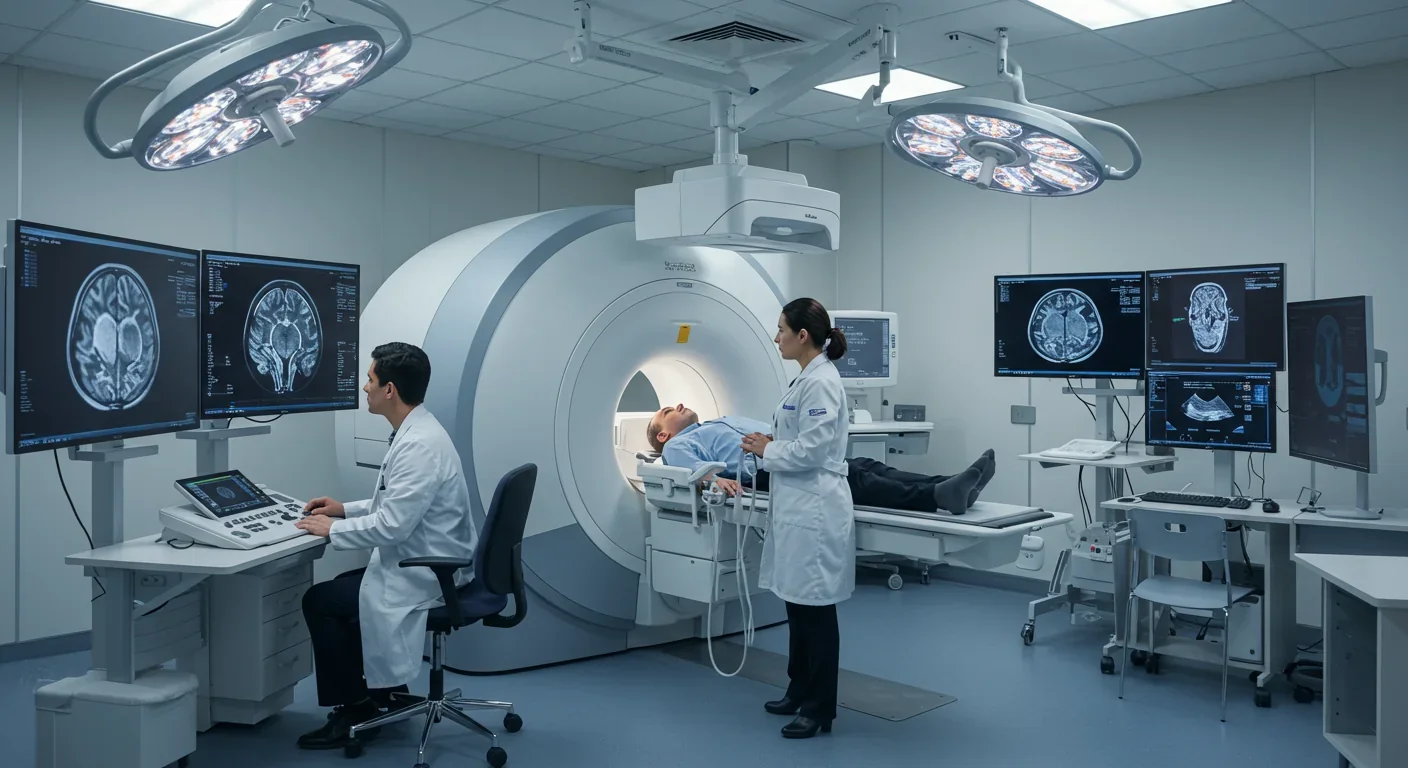
By 2030, doctors predict that many neurological patients who would have needed brain surgery will instead receive treatment through their skull, no hardware implanted, using nothing more than precisely focused sound waves. The transformation is already underway, and it's happening faster than most people realize.
For decades, treating conditions like Parkinson's disease, chronic depression, or epilepsy meant choosing between medications with nasty side effects or invasive brain surgery. Deep brain stimulation works, but it requires drilling into your skull and threading electrodes into your gray matter. Now, researchers have developed sonogenetics, a technique that merges focused ultrasound with genetic engineering to stimulate specific neurons remotely.
Here's what makes this revolutionary: transcranial focused ultrasound can safely induce neural activity changes with millimeter precision, reaching deep brain structures like the thalamus without breaking skin. Clinical studies show it reduces tremor for at least 30 minutes post-treatment and decreases seizure frequency for months. Some patients report sustained reduction in substance-use cravings lasting beyond initial treatment periods.
The technology works by exploiting how neurons respond to mechanical forces. When you genetically modify target cells to express mechanosensitive proteins, then aim low-intensity focused ultrasound at them, those cells activate while neighboring tissue remains quiet. It's like having a remote control for your brain, except the batteries are sound waves.
The path here wasn't straight. Scientists have known since the 1920s that ultrasound could affect biological tissue, but for most of that century, the main applications were imaging (ultrasounds for pregnant mothers) or destruction (blasting kidney stones). The idea of using sound to gently modulate brain activity emerged slowly through convergent research streams.
In the early 2000s, neuroscientists were wrestling with optogenetics, a technique where light activates genetically modified neurons. It worked beautifully in mice but hit a wall in larger brains because light doesn't penetrate deep tissue. Meanwhile, medical physicists were refining MRI-guided focused ultrasound for treating essential tremor by permanently ablating overactive brain regions.
The conceptual leap came when researchers asked: what if instead of destroying tissue, we could reversibly control it? And what if we borrowed the genetic engineering playbook from optogenetics, but swapped light for sound?
Early proof-of-concept studies demonstrated that TRPV1, a heat-sensitive protein, could be activated by low-intensity focused ultrasound at around 0.7 MPa with temperature rises under 42°C. Mice expressing this protein in their motor cortex showed behavioral changes when sonicated, while wild-type controls did nothing. That was the spark.
By the 2010s, multiple labs were racing to identify the best mechanosensitive proteins. Human TRPA1 emerged as particularly sensitive to pulsed high-frequency ultrasound. Piezo channels, naturally evolved to detect touch and pressure, became prime candidates. Engineering variants of bacterial mechanosensitive channels like MscL showed promise for even finer control.
Think of your neurons as tiny drums. Normally they respond to chemical signals, neurotransmitters binding to receptors. But cell membranes are also mechanically sensitive. Stretch them, compress them, or vibrate them just right, and ion channels open, triggering electrical signals.
Sonogenetics exploits this by introducing proteins engineered or selected for ultrasound sensitivity. Low-intensity, low-frequency focused ultrasound around 0.5 MHz at pressures below 1 MPa can mechanically activate channels like TRPA1, TRPC1, TRPP2, TRPM4, and Piezo1. When ultrasound pulses hit these proteins, they change shape, opening pores that let calcium and other ions rush in, firing the neuron.
The beauty is specificity. Only cells expressing the engineered protein respond. You can target a population of dopamine neurons in one brain region while leaving everything else alone. The ultrasound beam can be focused to a spot roughly one cubic millimeter, guided in real-time with MRI imaging.
Here's where it gets clever: researchers discovered that adding microscopic gas-filled structures, either engineered gas vesicles or microbubbles, amplifies the effect. These tiny bubbles oscillate under ultrasound, creating localized shear forces that activate mechanosensitive channels at much lower acoustic pressures. That means safer treatment with less energy required.
Safety monitoring uses MR-ARFI (acoustic radiation force imaging) and MR-thermometry to verify the ultrasound is hitting the right spot and not overheating tissue. Early-phase human trials report no adverse effects. The temperature stays below damage thresholds, and the mechanical forces are gentle enough that patients feel nothing.
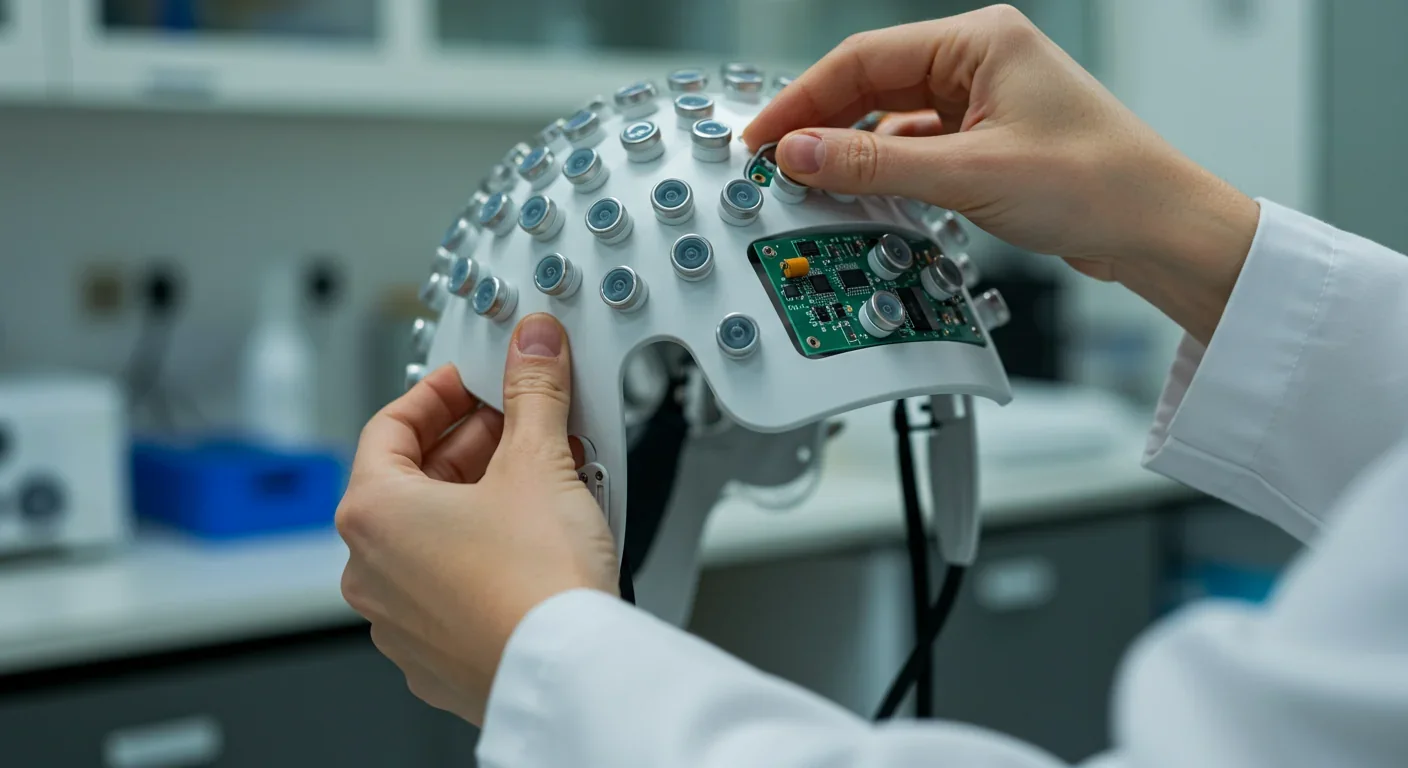
This isn't science fiction. Multiple clinical programs are already testing focused ultrasound for neurological and psychiatric conditions.
Essential tremor: A randomized study targeting the ventral intermediate nucleus and dentatorubrothalamic tract showed significant tremor reduction lasting at least 30 minutes after treatment. Patients who'd been unable to hold a cup steady could write their names again.
Epilepsy: A pilot study with repeated TUS sessions reported reliable reduction in seizure frequency over several months. For patients with drug-resistant epilepsy, this represents a non-surgical alternative to resection or implanted devices.
Substance use disorder: Trials targeting the nucleus accumbens showed decreased cravings that persisted for months. The mechanism likely involves disrupting reward circuits that perpetuate addiction.
Depression: Researchers are testing ultrasound neuromodulation for major depressive disorder, building on evidence that targeting specific brain circuits can alleviate symptoms. The UK's NHS is even preparing trials of an implantable ultrasound device that delivers ultrasound from inside the skull.
Chronic pain: Systematic reviews of low-intensity transcranial ultrasound show promise for reducing pain perception, though the mechanisms are still being mapped out. It might work by modulating pain-processing regions or dampening hyperactive neural circuits.
The common thread is reversibility. Unlike surgical ablation, if sonogenetic treatment doesn't work or causes unexpected effects, you just stop the ultrasound. The neurons return to baseline. You're not burning bridges, you're testing them.
United States: The FDA has a clear pathway for focused ultrasound devices, having already approved MRI-guided FUS for essential tremor and bone metastases. American institutions like Stanford and UCSF are running sonogenetics trials, but progress faces the classic tension between rapid innovation and cautious regulation. The gene therapy aspect adds complexity, since delivering engineered proteins to the brain requires either viral vectors (AAV injections) or systemic administration, both of which trigger additional FDA scrutiny.
Europe: The UK's approach shows pragmatic willingness to trial novel technologies within the NHS framework. European regulatory bodies are coordinating standards across member states, which can slow initial deployment but creates a larger unified market once approved. Countries with strong public health systems see sonogenetics as potentially cost-saving compared to chronic medication or surgical procedures.
China: With massive investment in neuroscience and fewer regulatory hurdles, Chinese researchers are moving quickly. Several groups are exploring sonogenetics for both research and clinical applications. The country's centralized healthcare system allows for larger-scale trials, though international collaboration and data sharing remain uneven.
Japan: Known for advanced medical technology, Japan is focusing on precision and miniaturization. Researchers there are developing portable ultrasound devices and refining targeting algorithms. Cultural factors also play a role; non-invasive treatments align with preferences for less aggressive medical interventions.
The global race has both competitive and collaborative elements. International conferences share findings, but intellectual property battles are already brewing over key proteins and device designs. Access equity looms as a concern; will this technology remain confined to wealthy nations and elite medical centers, or can it scale to serve populations in lower-income countries?
Every powerful technology raises questions, and sonogenetics is no exception. Start with the gene therapy component: to make neurons ultrasound-sensitive, you need to introduce foreign proteins, usually via viral vectors like AAV. This isn't new, gene therapy is already FDA-approved for conditions like spinal muscular atrophy, but it's invasive (requires injection into the brain or cerebrospinal fluid) and carries risks of immune reactions or off-target effects.
Then there's the question of reversibility versus permanence. The ultrasound modulation is reversible, sure, but the genetic modification is not. Once you've engineered a population of neurons to express TRPA1 or MscL, they'll keep expressing it. You're permanently altering someone's brain architecture, even if the control mechanism is external and adjustable.
Informed consent gets tricky with psychiatric applications. If you're treating severe depression or addiction, patients may not be in the best position to evaluate complex risks and benefits. How do you ensure truly voluntary consent when someone is desperate for relief?
There's also the dual-use concern. A technology that can remotely activate neurons could theoretically be weaponized or used for coercion. Mechanosensitive channels are fundamental to biology; if someone develops portable ultrasound devices capable of affecting engineered or even native channels, the implications extend beyond medicine. Regulatory frameworks need to keep pace.
Safety profiles so far look good. Published trials report no adverse effects from the ultrasound itself when parameters stay within established limits (below 100 W/cm², avoiding cavitation, monitoring temperature). But long-term data is sparse. We don't know what happens after years of repeated sonogenetic treatment. Could there be cumulative tissue damage? Might chronic ultrasound exposure alter brain structure in unforeseen ways?
Off-target effects remain a concern. Early studies identified auditory activation as a confounding factor, since ultrasound can indirectly stimulate the inner ear, producing sensations or startle responses unrelated to the target neurons. Researchers are refining waveform shapes to minimize this, but achieving perfect specificity is an ongoing challenge.

If this technology follows the trajectory researchers expect, what should you know?
First, understand that we're in the early innings. Sonogenetics is not going to replace all brain treatments next year. But within the next decade, it's likely you'll know someone who receives ultrasound neuromodulation for tremor, depression, or chronic pain. The infrastructure is being built now: radiology departments are establishing focused ultrasound programs, neurosurgeons are training in non-invasive techniques, and regulators are drafting guidelines.
For patients and families, this means new options. If you or a loved one has Parkinson's, epilepsy, or treatment-resistant depression, keep an eye on clinical trials. Participating in early-phase research carries risks, but it also offers access to cutting-edge care and contributes to knowledge that will help future patients.
For medical professionals, sonogenetics represents a skill shift. Neurosurgeons may find their role evolving from hands-on procedures to image-guided, computer-assisted targeting. Radiologists and medical physicists will become central to neurological treatment teams. Gene therapy expertise will merge with neuromodulation practice.
For investors and entrepreneurs, the market potential is enormous. Focused ultrasound device manufacturers, gene therapy companies developing viral vectors, and software firms creating targeting algorithms are all positioned to grow. But the path to commercialization is long and capital-intensive, requiring navigation of complex regulatory landscapes across multiple countries.
For society at large, questions about access and equity will demand attention. Will insurance cover sonogenetic treatments? How do we ensure that these benefits don't accrue only to those who can afford premium care? Public health systems will need to evaluate cost-effectiveness compared to existing treatments and decide on reimbursement policies.
The broader implication is that our relationship with our own brains is changing. We're moving from an era where mental and neurological conditions were things that happened to us, toward one where we have precise tools to edit and modulate our neural activity. That shift brings both profound opportunities and responsibilities we're only beginning to grapple with.
Sonogenetics might be the bridge between today's pharmacology and tomorrow's fully integrated brain-computer interfaces. Once you can stimulate neurons remotely with sound, and once you can genetically engineer those neurons for specific responses, the next questions become: can we read neural signals the same way? Can we create closed-loop systems where the brain's activity directly controls the ultrasound parameters? Can we use this for enhancement, not just treatment?
We're standing at a threshold. The technology exists. The early clinical data is encouraging. The ethical frameworks are being debated. What happens next depends on choices we make collectively about how to develop, regulate, and deploy these tools. One thing seems certain: the future of brain therapy won't look like brain surgery. It'll look like a carefully aimed beam of sound, invisible and precise, reaching through bone and tissue to touch neurons that have been waiting, engineered and ready, for exactly that signal.

Project Orion was a real 1960s program to reach other stars by detonating 800 nuclear bombs behind a spacecraft. The physics worked and the engineering was feasible, but the 1963 nuclear test ban treaty killed it. It remains the most credible interstellar spacecraft ever designed.
The locus coeruleus, a tiny brainstem structure, degenerates decades before Alzheimer's symptoms appear. Its loss cripples the brain's inflammation control, waste clearance, and sleep regulation. New imaging tools and noradrenergic therapies offer hope for early detection and prevention.

Research shows the sharing economy often increases total resource consumption through the Jevons paradox and rebound effects. Ride-sharing adds billions of vehicle miles, co-working spaces use more energy per worker, and diffused responsibility erodes conservation behavior. Breaking the paradox requires congestion pricing, accountability design, and matching sharing models to appropriate resource types.

Psychological reactance theory explains why banning or restricting things makes people want them more. From Prohibition to the Streisand effect to scarcity marketing, research shows that threatening people's freedom reliably backfires, and autonomy-supportive communication is far more effective.

A carnivorous pitcher plant in Borneo evolved to house bats instead of trapping insects, gaining up to 95% of its nitrogen from bat guano. The plant even built an ultrasonic reflector to help bats find it, revealing that carnivory in plants is a flexible spectrum.

The quantified self movement began as a hacker-ethos pursuit of personal insight, but corporate wearables now funnel biometric data to employers, insurers, and data brokers. With 81% of Americans wrongly believing health apps are HIPAA-protected, a regulatory void enables health data to be sold for pennies while generating anxiety instead of empowerment.

CXL memory pooling lets servers dynamically share DRAM over a cache-coherent interconnect, eliminating the 40% stranded memory waste in data centers. With commercial hardware now shipping and Azure deploying CXL cloud instances, this technology promises to cut memory costs by 50% while enabling composable infrastructure.

Loading featured articles...